
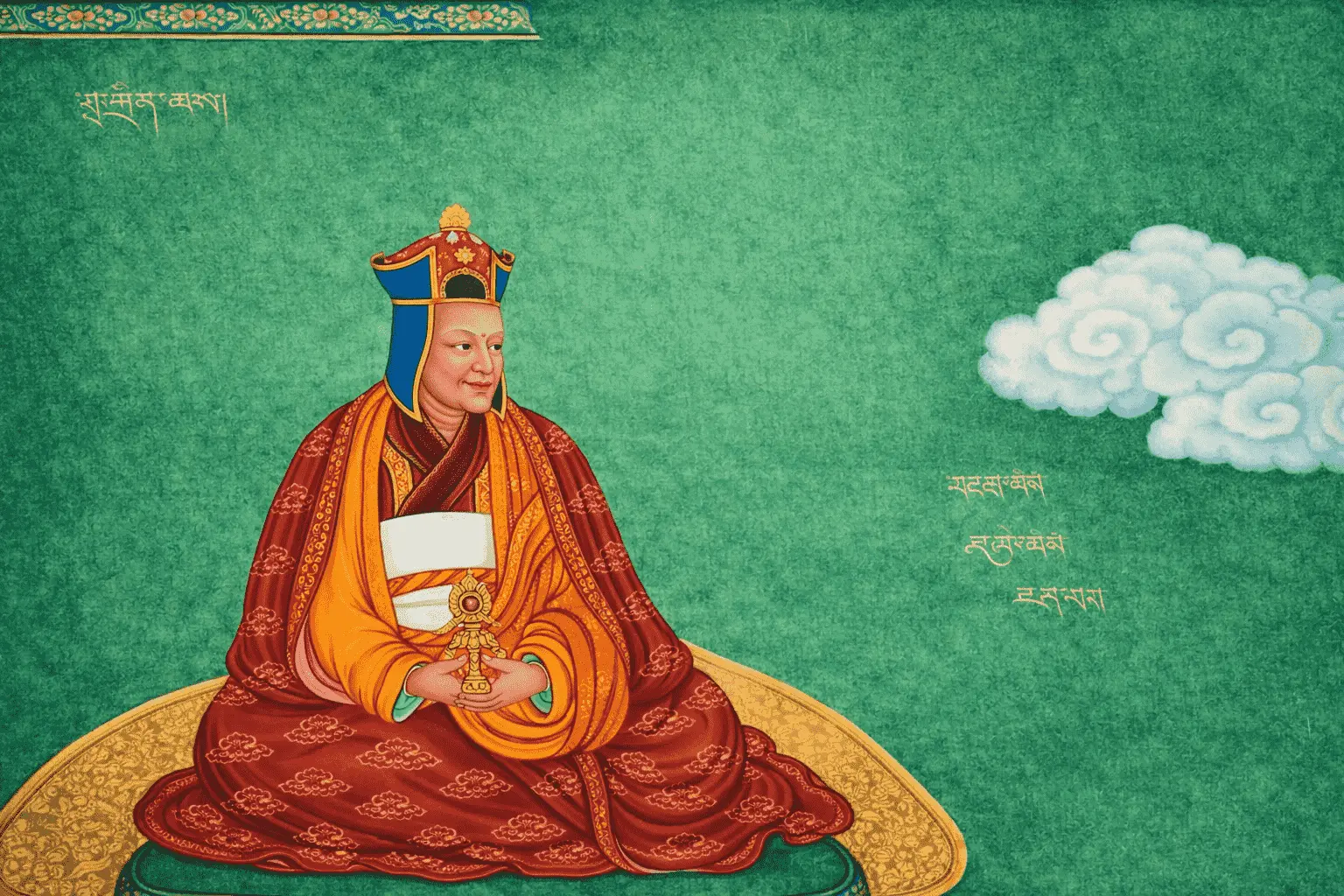
Yonphu Dungyued (Lineage) is descended from Terton Ratna Lingpa, also known as Rinchen Lingpa (གཏེར་སྟོན་རཏྣ་གླིང་པ།), a renowned Treasure Revealer and one of the Eight Lingpas. This lineage later came to be known as Yonphu Dungyued when one of his sons, known as Garab Dorji, meditated on the hilltop of what is now called Yonphula (ཡོན་ཕུལ།).
Young villagers who had gone to collect firewood discovered this great master in deep meditation. Due to his unusual outer appearance, the boys were uncertain whether he was human or some other being. Upon hearing their account, the village elders decided to visit the site themselves. They were astonished to find such a remarkable master meditating near their village.
After earnest requests from the elders to guide their community, the villagers offered their entire village under his spiritual leadership. From that time onward, the village came to be known as Yonphula, meaning “the hill offered to the Lama”, in gratitude for his kindness in becoming their teacher.
Soon after settling in Yonphula, he built a small temple, now known as Choegyued Lhakhang. From then on, his direct descendants became known as Yonphu Dungyued, while the villagers came to be known as Yonphu Choegyued. His successors faithfully carried out Dharma activities in the region for many generations.
As time passed, during the 19th century, misunderstandings arose among local rulers, and several minor conflicts broke out in the area. As a result, the brothers were compelled to part ways. The eldest son, Phajo Karma Tsewang, settled in Shingkhar Lauri—the valley where our monastery is presently located—and established his lineage there, benefiting countless beings in the region. His lineage continued to be known as Yonphu Dungyued, and the followers and patrons who accompanied him remained known as Yonphu Choegyued.
My grandfather is the great-great-grandson of Phajo Karma Tsewang. To this day, people continue to hold deep respect, devotion, and faith toward this lineage, maintaining strong hope and expectation for its guidance and support in alleviating their suffering.
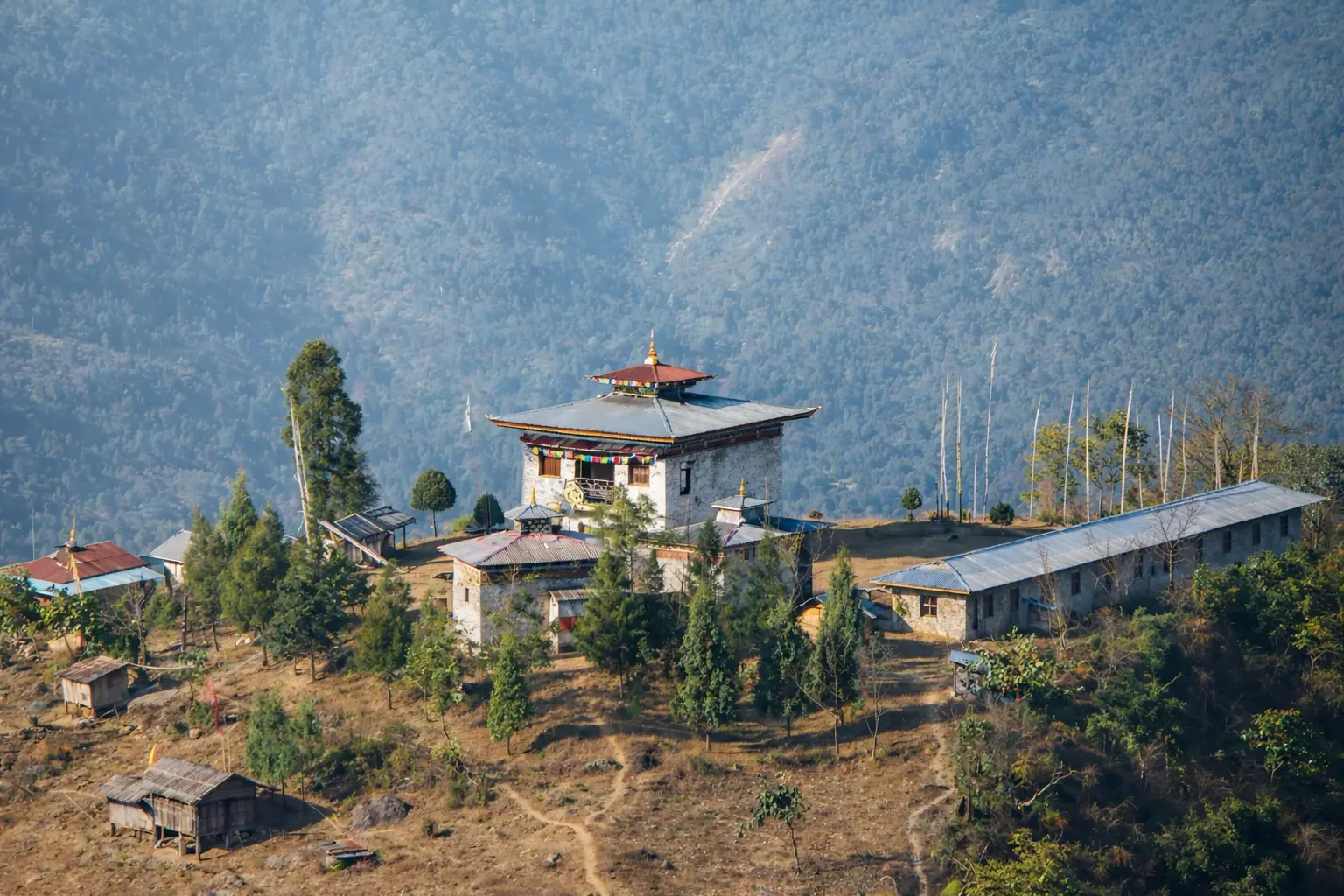
According to the prophecy and prediction of H.H. Dudjom Rinpoche Jigdrel Yeshi Dorji, Lama Rinpoche Kuenzang Namdrol, also known as Sangye Wangdue, migrated to a rural area known as Phagchok in Eastern Bhutan. At that time, Buddhism was not flourishing in this region. Seeing this as an opportunity to help sentient beings awaken from the deep sleep of ignorance and to clear away their misconceptions, Lama Rinpoche, along with a few devoted households, began constructing a monastery in the year 1973.
This endeavor proved to be beneficial for all beings, particularly for the people of the Phagchok community. In the beginning, there were around 15 lay monks receiving teachings from Lama Rinpoche. All necessary accommodations, including food, clothing, and shelter, were provided by Lama Rinpoche himself.
After numerous difficulties and hardships, Lama Rinpoche, with the support of a few devoted followers, successfully completed the construction of the monastery in Phagchok, which came to be known as Phagchok Samdrup Chöling Gonpa. Gradually, the number of lay monks increased, as did the number of people practicing Buddhism and its traditions.
Dynamic Buddhist values, such as surrendering one’s precious life for the sake of practicing Buddhism and placing others’ well-being before one’s own, were highly regarded by Lama Rinpoche and taught for faithful practice. Lama Rinpoche personally went door to door to beg for alms in order to sustain the lay monks and keep the monastery running. This tradition has been upheld by his four sons since the day following his nirvana in 2007.
The lay monks of the monastery are taught the traditions of Pelling and Dudjom Terser. These traditions include mask dances, paintings, sculptures, rituals, and ceremonies. The monks also receive teachings and empowerments in Ngondro, Tsasum Nyenpa, and the Dzogchen tradition.
The Pelling tradition, which had been introduced in the past but not practiced effectively in the villages, was reinstated by Lama Rinpoche. As a result, the monastery came to be known as the Mother Source of the Pelling Tradition. The Dudjom Terser tradition was also reintroduced in the monastery, making it an upholder of two secret traditions.
Meanwhile, Lama Rinpoche Kuenzang Dorji, the eldest son of Lama Rinpoche, assisted his father in developing the monastery. After returning from Jangsa Gonpa in Kalimpong, West India, Lama Rinpoche Kuenzang Dorji took responsibility for introducing the Dudjom Terser tradition in the monastery.
Over time, the number of monks joining the monastery increased, and at present, there are approximately 200 lay monks studying, meditating, and performing rituals and ceremonies for the welfare of all sentient beings.